Posts

Plugged In

For our November work party we had a great morning planting in the wildflower meadow. After a wet week the weather was kind to us on the day itself, and the ground nicely softened up by the rain.

We had a mix of 500 wildflower plug-plants and 1,000 fritillary bulbs to put in, which you’ll be able to lookout for as they flower next year. They’ve been planted in patches across the meadow so we’re hoping for small patches of colour across the field.

It was a fabulous way to while away a Sunday morning.

You can join us on our next work group on the first Sunday in December, when Jason will be leading us in a bit of coppicing. We may also have a few leftover bulbs to put in…

Below are some of the plants we’ve put in so you know what to look for, with links to the rest if you’re interested.

Some of these I recognise from my own garden, I just never knew what they were called until now šŸ™‚

Image credit: https://commons.wikimedia.org/wiki/File:Fritillaria_meleagris_MichaD.jpg

As the fritillary once thrived in flooded hay meadows across middle and southern England, it should be at home in Hreod Burna.

By the time we’re finished, 1,000 bulbs will have been planted, so we’re hoping for an excellent display when they flower in April & May.

Meadow crane’s-bill has hairy stems and saucer-shaped, white, blue or violet flowers about 4cm across. It can be seen in lowland hay meadows, roadside verges and grasslands. It flowers between June and August.

Image credit: https://commons.wikimedia.org/wiki/File:Meadow_Cranesbill_(Geranium_pratense)-_geograph.org.uk-_876517.jpg

Image credit: https://commons.wikimedia.org/wiki/File:Oxeye_daisy-oliv.jpg

Oxeye Daisy, found in traditional hay meadows and along field margins. Its large blooms appear from July to September and are so bright that they appear to ‘glow’ in the evening, hence the other common names of ‘Moon daisy’ and ‘Moonpenny’.

Below is a list of all the plants we put in this time, with links to the Wildlife Trusts and Royal Horticultural Society web sites if you fancied finding out a bit more.

Birds Foot Trefoilhttps://www.wildlifetrusts.org/wildlife-explorer/wildflowers/common-birds-foot-trefoil
Common Toadflaxhttps://www.wildlifetrusts.org/wildlife-explorer/wildflowers/common-toadflax
Cowsliphttps://www.wildlifetrusts.org/wildlife-explorer/wildflowers/cowslip
Field Scabioushttps://www.rhs.org.uk/Plants/9742/Knautia-arvensis/Details
Meadow Buttercuphttps://www.wildlifetrusts.org/wildlife-explorer/wildflowers/meadow-buttercup
Meadow Cranes Billhttps://www.wildlifetrusts.org/wildlife-explorer/wildflowers/meadow-cranes-bill
Oxeye Daisyhttps://www.wildlifetrusts.org/wildlife-explorer/wildflowers/oxeye-daisy
Red Campionhttps://www.wildlifetrusts.org/wildlife-explorer/wildflowers/red-campion
Rough Hawkbithttps://www.rhs.org.uk/Plants/75801/Leontodon-hispidus/Details
Fritillarieshttps://www.wildlifetrusts.org/wildlife-explorer/wildflowers/snakes-head-fritillary
Wildflower Meadow Plants & Bulbs

Plugged In Read More Ā»

Let’s get to work…

So that it can reach its full potential as a haven for wildlife and people alike in the urban landscape of Swindon, the Hreod Burna Urban Forest needs a lot of work.

Following on from the huge success of our efforts to mow the wildflower meadow in September, we have plans to take on a series of vital jobs in other parts of HBUF.

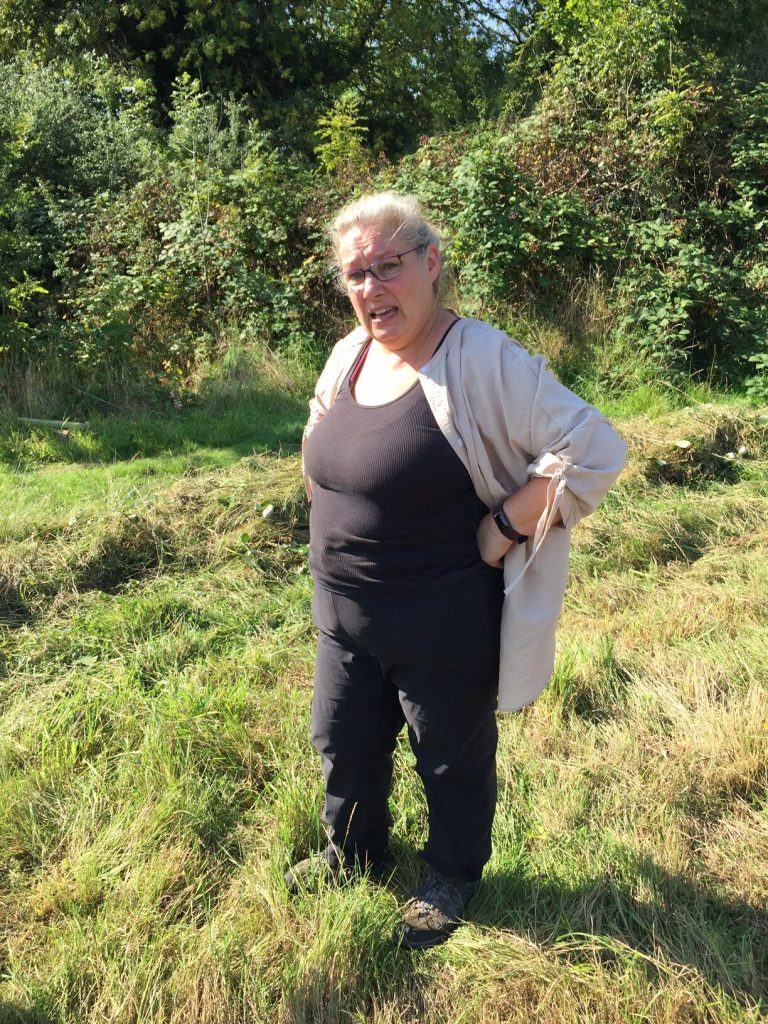
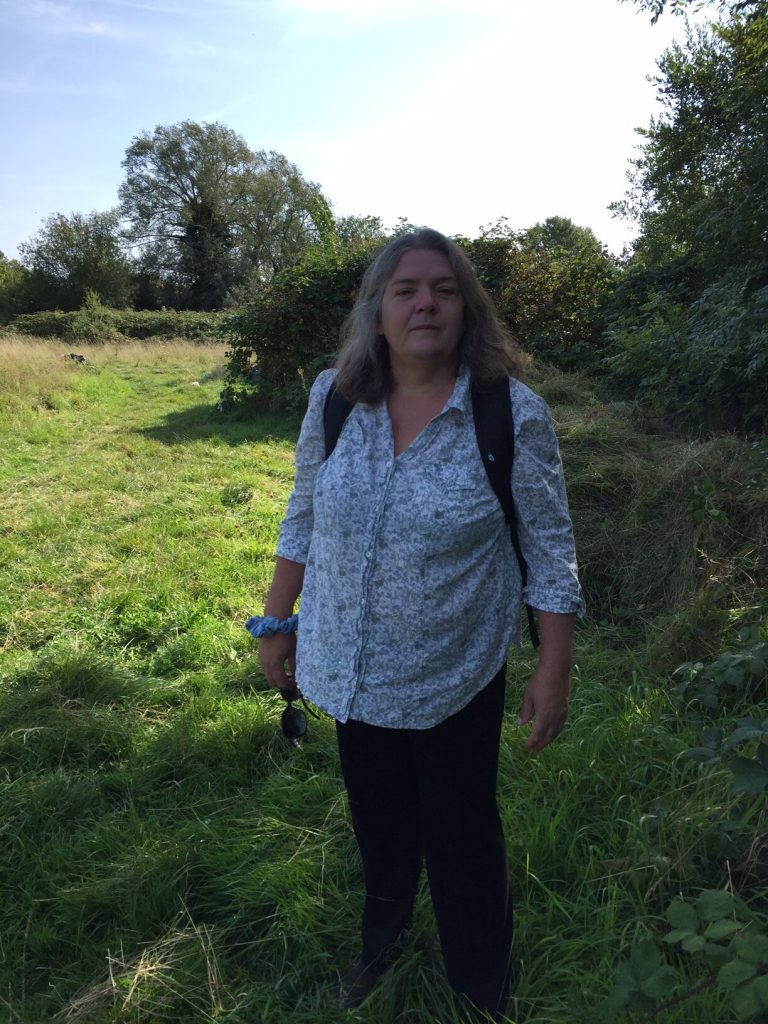
Just some of our wildflower volunteers

Over the coming months we have volunteers from various groups coming in for one-off events and we’re launching a regular get-together once a month to tackle a long list of jobs that the trustees have identified:

  • Strimming, clearing of brambles and cutting back in some areas to allow new planting and maintain previously planted areas.
  • Creating a grove of birch trees around the trees rescued from the Moonrakers roadworks.
  • Preparation and planting of our Celtic tree circle.
  • Strimming and clearance of existing paths and cutting back trees/undergrowth in preparation for laying of new paths.
  • Coppicing – this was started last autumn and needs to be maintained.
  • Planting of trees & under-storey shrubs (e.g. box, yew, holly).
  • Planting of 1,000 fritillaries and wildflower plug plants in the wildflower meadow.
  • Clearance of the Himalayan balsam growing along the brook – it’s an invasive species.

Our regular work parties will be on the first Sunday of every month, starting on the 1st of November.

The events will be covid-safe. We have plenty of jobs spread across the site to allow small groups to work at distance within government guidelines.

We’ll post more details of the particular works planned each month closer to the date, and what particular skills & equipment (gloves, tools, etc.) might be required. If you can join us every month, or just for an hour or two every now and again, your efforts will be greatly appreciated (not just by us but by everyone that gets such joy from the forest both today and for years to come).

You can check back here or on Facebook for news of upcoming events. If you haven’t already, why not subscribe to our mailing list for advanced warning of events and other updates from HBUF.

Let’s get to work… Read More Ā»

The Great British Mow-Off

Last Sunday, 13th September 2020, at 10.00am, a large group of people met at our wildflower meadow to help with the annual mow and rake.

Photo of the wildflower meadow before the mowing. Grass and wildflowers up to 3 feet high.
Before…

So, how many people does it take to mow and rake a meadow?  I counted twenty; and they were perfectly splendid specimens of humanity who had given up their Sunday morning to engage in some pretty vigorous exercise.  One of them, pressed into service by his girlfriend’s mother, was seized upon straight away to mantle (if there’s a ā€˜dismantle’, there has to be a ā€˜mantle’, right?) a new rake before using it to do some raking.  Bob started on another, but had to stop as he lost a nut and bolt.  Can’t get the staff.  The girlfriend, by the way, had stayed in bed. 

There was a certain amount of standing around to begin with, since an assumption had been made that the mowing would have already taken place during the week.  That assumption is all tied in with an inference about mowers – just because something is mechanical doesn’t mean that it is just a walk in the park.  At some point soon, we will be getting a tractor and then, perhaps, we can talk about walks in parks, but for now, take it as read that mowing with a scythe-mower is a strenuous work-out.

However, this standing around was a brilliant opportunity to engage with new people, to see old friends, chat over how and why everyone had come, put faces to names, marvel over what a little jewel Hreod Burna Urban Forest is, and express surprise that so many people who live in the area do not know of its existence.

Andy took the first shift with our scythe-mower and he alternated with our press-ganged boyfriend over the course of the morning.  Since I have very little muscle, I did a bit of raking to show willing till my little muscle gave up, and everyone else did a lot of energetic raking.  Then I remembered the important job of taking photographs.  I hope you will be able to spot yourself in one of them.  Unfortunately, Andy won’t be able to spot himself as I missed him out (sorry, Andy, one day your turn will come and you will achieve stardom).

Photo of wildflower after the mowing. Large area of rough cut grass.
…after!

All of this airy persiflage goes to express our huge thanks to everyone who came and worked so hard.  We are particularly thankful because of all the setbacks everyone has had this year so far.

Checkout our volunteers in action…

[ngg src=”galleries” ids=”1″ display=”basic_slideshow” pauseonhover=”0″ arrows=”1″]

P.S.  During the course of the morning, Jason’s daughters found beetles, frogs, toads, crickets, grasshoppers, and even a mouse.  Several of us were gifted, furthermore, with visits from dragonflies.

The Great British Mow-Off Read More Ā»

Our Sparrowhawks

For some years now, I’ve been noticing a particular call in the woods during spring.  You should be quite surprised at this, because I am notoriously unobservant and can rarely spot anything unusual or interesting.  Then, this spring, I came across what I took to be a bird of prey with a pigeon not far from the weir bridge; this was just beside the trees we planted in January close to Pinehurst Road. 

I did a bit of research on the internet (how on earth did we manage to find stuff out before this amazing invention?) and had a listen to the birds on www.british-birdsongs.uk.  My dog got a bit mystified as I worked my way through the recordings of black kite, red kite, kestrel, merlin, buzzard, peregrine falcon and more.  Well, enough of the waffle, it transpired that it was the call of the sparrowhawk I was hearing.  Steve (Thompson) posted the information on our Facebook page a little while ago.

Then, suddenly, there were no more calls.  What had just happened?  Had we let the cat out of the bag and vandals had done away with our beautiful birds of prey?  On my daily walk, I noticed a car-sticker calling for action to protect songbirds and racing pigeons – horror of horrors!

Then Google let me down.  I could find articles about the effect of birds of prey on local songbird populations (not significant apparently, so the car-sticker person should worry less) and lots of other information, like for example, that the female is larger than the male, so the latter is able to manoeuvre much better than his missus, but no information about seasonal calls.

Eventually, I emailed the British Trust for Ornithology.  The reply was at the same time comforting as well as perturbing:

“In short, you are right about Sparrowhawks only being vocal during the breeding season. The male will call to the female when he brings food in. He doesn’t approach the nest as he might become food himself – males are much smaller than females – the food is handed over away from the nest to much calling by the female. Once the young get bigger they too will call for food. Once the young leave the nest they will perch close by for a week or two and call for food but once they become independent the wood will fall silent until next year. Outside of the breeding season Sparrowhawks are largely silent.”

So, there you have it.  Our sparrowhawks are safe at HBUF, though the male is rather less safe than the female.

Our Sparrowhawks Read More Ā»

News of brambles, anemones, and technical challenges

Well, not really news of course, just a few lines of airy persiflage.

When I was walking the dog yesterday, benefiting from the delightful sunshine, I was a bit taken aback to see an elderly (i.e. older than me, and I can remember the days when you could claim a ?fiver if you spotted the chap with the relevant newspaper at the seaside and tapped him on the shoulder, while showing him the same newspaper – maybe a bit convoluted, but those in the know will remember) couple, he with a pair of loppers in his hand and she standing beside him with a carrier bag. I asked what they were doing, and she replied that they were cutting away the brambles as these were “… choking the poor young trees”. I asked them to stop, as the brambles, on the contrary, protect the young trees, which have grown very well in their thorny embrace, and are, furthermore, happy not to have to compete with grass. I don’t think they believed me, though, as he didn’t stop. But maybe he was just a bit hard of hearing (I wouldn’t like to suggest he found it hard to change his opinion).

The anemones beside the stream are looking very pretty, and so is the blossom on the trees beside the walk there.

Well, I did manage to put the last lot of minutes (March 2020) on to the Minutes of Meetings page – no thanks to WordPress.com, who keep changing the way things are done. Improvements, no doubt, but just as annoying as Microsoft is whenever they bring out a new version of Word. All of a sudden, after you’d learnt how to format something in a certain way, there they go, improving everything, and you can’t find it again.

All for now.

News of brambles, anemones, and technical challenges Read More Ā»

What next then?

Our lives have altered so much since I last wrote here.

The days are getting longer, the camellia outside my front window at home is in bloom (and looks wonderful), this last week has been sunny and bright, and the mud in HBUF is just about starting to dry up (but better not tempt fate there).

We are all now waiting to get through these difficult times. I am so grateful to be able to take a daily walk with my dog through HBUF.

Little did we know at our last monthly meeting on 9th March that there could be no more meetings for a while. I shall be posting those minutes on this website as soon as I have remembered how to do it …

What next then? Read More Ā»

Ecology Report

4th March 2020

Till the Parish (Central Swindon North Parish Council) have completed their ecology report on HBUF land, we aren’t able to plant anything within our leased property.

We should be able to find out soon when this report will be taking place.

Ecology Report Read More Ā»

News in brief

  • No HBUF meeting on Monday 10th February.
  • Next HBUF meeting on Monday 9th March.
  • The parish has given permission for the trees to stay on Cricklade Field (apart from some that were too close to the gas pipe).
  • Work party on Saturday 8th February, Cricklade Field to move those trees and to re-stake those that need it.
  • Another work party on Saturday and Sunday, 15th and 16th  February, to plant on the parish land behind the football changing rooms.

News in brief Read More Ā»

Current Furore

This is the letter I sent to the Swindon Advertiser on 11th January 2020. It is a response to the articles of 4th and 10th January, which you may have read about.

They haven’t yet published my letter, so here it is in full:

11th January 2020

Mr Pete Gavan, Editor

Swindon Advertiser

Letters@swindonadvertiser.co.uk

Dear Sir

Re: Hreod Burna Urban Forest

With reference to the articles of 4th and 10th January wherein Josie Lewis, a Wroughton resident, outlines her opposition to the planting of trees in Gorse Hill and Pinehurst: as a fellow Trustee of HBUF, I am disturbed and dismayed by this person’s attacks on our group.  HBUF is a charitable trust that, as our name suggests, exists to promote wildlife, woodland and the planting of trees in an urban area, for the benefit of the local community. 

As a matter of record, at the last full Parish Council meeting 18th December 2019, it was agreed that the trees planted on the Cricklade Field should remain. 

This person has been fiercely against any trees on the Cricklade Field from the very beginning, and has changed her arguments each time they were shown to be incorrect.  These arguments have ranged from ā€˜open space’ being legally different from ā€˜public open space’ to the suggestion that HBUF would be breaking our lease if we planted trees in certain areas of our land. 

She says that public open space is ā€œby definition […] a sports ground or playing fieldā€.  This is not the case, as there is no statutory definition of this phrase.  Note, however:-

Section 20 of the Open Spaces Act 1906 states that the “expression `open space’ means any land, whether inclosed or not, on which there are no buildings or of which not more than one-twentieth part is covered with buildings, and the whole of the remainder of which is laid out as a garden or is used for purposes of recreation, or lies waste and unoccupied.”

Memorandum by The Open Spaces Society (TCP 19)

Select Committee on Environment, Transport and Regional Affairs – Memoranda April 1999

In both 4th and 10th January articles your explanation of the link between Swindon Borough Council, the Central Swindon North Parish Council and HBUF is unsatisfactory.  HBUF does not run the area on behalf of the Parish.  There is a lease; it existed between SBC and HBUF; it now exists between the Parish and HBUF.

The minutes of our meetings are on public record and may be read on our website hreodburnaurbanforest.com.  These will support all of the information I refer to in this letter.  They show where opposing opinions have been voiced, as well as proposals and decisions made on a democratic basis.

I am most concerned, in these worrying times of climate crisis, that this person has seen fit to denigrate all that we are attempting to do.

Mary Farragher

Secretary, HBUF With endorsement by fellow Trustees Kate Henery, Treasurer, and Sue Gwinnell, Vice Chair

Current Furore Read More Ā»

Scroll to Top